
Wheel Repair and Powder Coating in Cranston, RI: Care, Damage and Fixes
· By Fabiano Pereira
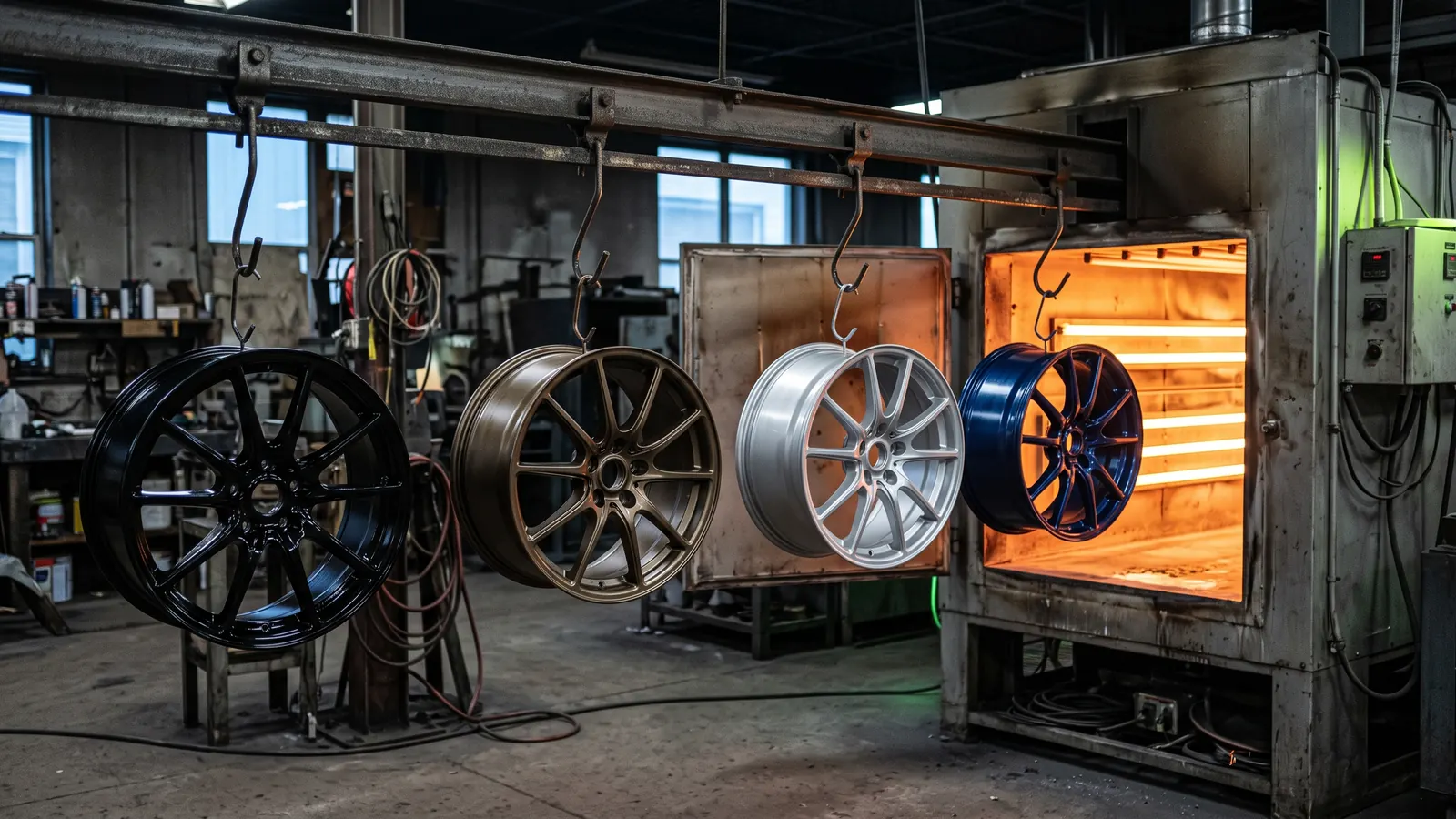
Cranston sits right between Providence and Warwick, and its drivers get a bit of everything: busy commercial strips, fast highway commutes on Route 37 and I-295, and older residential streets that crack and heave every winter. All of it adds up on your wheels.
This guide covers what Cranston roads typically do to rims and calipers, the habits that keep wheels looking good longer, and how to tell when a wheel needs repair, refinishing or replacement. Our shop is in neighboring Warwick, so a lot of Cranston drivers are only a few minutes away when they need work done.
How Cranston Driving Wears Down Your Wheels
A lot of Cranston traffic runs on a handful of roads: Reservoir Avenue (Route 2), Park Avenue, Pontiac Avenue, Atwood Avenue and the stretch of Route 5 and Route 12 heading west. These roads carry heavy traffic and plenty of trucks, and by late winter the patches and potholes show it. A pothole hit at 35 mph is all it takes to bend the lip of a modern wheel with a low profile tire.
Route 37 and I-295 add highway speed to the mix. Expansion joints, seams and the occasional piece of debris hit harder when you are moving fast, and that is where we see more bends on the inner barrel, the side most people never look at.
Then there is the everyday stuff. Shopping plazas around Garden City and the Cranston Street and Reservoir Avenue corridors are full of tight spaces and parking blocks. Pulling in a little too close to a curb is how most wheels pick up their first scrape.
Road Salt, Brine and Corrosion
Like the rest of Rhode Island, Cranston roads get salt and brine through the winter. That is good for traction but rough on metal. Salt water finds any chip in the factory clear coat, and aluminum underneath starts to corrode, showing up as white spots, bubbles or paint lifting at the edges.
Neighborhoods in western Cranston see a little more of this, since the higher, more rural roads can get extra treatment during storms. Steel wheels on trucks and work vans rust faster still, and brake calipers sitting right behind the wheel spokes take a direct hit of salty spray every time you drive.
Corrosion rarely stays small. Left alone, a few spots can spread under the finish over a single season. If you notice it early, the repair is usually simpler and the result is cleaner.
Easy Ways to Protect Your Wheels Between Seasons
The most useful habit is rinsing. During salt season, wash the wheels, tires and wheel wells every week or two, even if you do not wash the whole car. A hose with decent pressure and a soft wheel brush gets most of the salt and brake dust off. Touchless car washes with an undercarriage rinse are a good backup on cold days.
Stick to a pH balanced wheel cleaner. Acid based cleaners work fast but can dull clear coat and stain bare aluminum. After cleaning, a spray sealant or ceramic product makes the next wash easier and helps brake dust slide off.
Keep your tires properly inflated, especially during the big temperature swings of fall and spring. Low pressure leaves less cushion between the pothole and the rim. After a hard hit, take a look at the inner barrel with a flashlight. A small bend there can cause a slow leak or a vibration you will not trace back for weeks.
Cosmetic Damage vs Real Safety Problems
Curb rash, scratches, faded or peeling paint and light corrosion are cosmetic. They are worth fixing because they get worse and they hurt resale value, but they do not usually affect how the wheel performs.
Bends and cracks are different. Steering wheel shake at highway speed, a tire that keeps losing air, or uneven tire wear can point to a bent rim. A crack, often found on the inner barrel or near a spoke, needs a professional look. Some cracks in aluminum wheels can be safely welded when they are in the right location; others mean the wheel should be replaced. We will tell you which one it is.
Not sure? Take photos of the wheel face and the inner barrel in daylight and send them over. A photo tells us a lot about whether you are looking at a refinish, a straighten, a weld or a new wheel.
How Wheel Repair and Powder Coating Work
A full wheel refinish usually starts with dismounting the tire and removing any TPMS sensor. The old finish is stripped down to bare metal by chemical stripping or sandblasting, and any curb rash or gouges are repaired. Cast aluminum wheels are often pre-baked so trapped gases escape before coating, which helps avoid small bubbles in the finish.
The powder is then applied electrostatically and cured in an oven at around 400 degrees Fahrenheit. The result is a tough, even finish that is generally thicker and more chip resistant than paint. After cooling, the tire is remounted and the wheel is balanced so it rides smooth.
Color is where it gets fun. With the Prismatic Powders library, you can stay close to factory silver or go with gloss black, bronze, gunmetal, candy colors or a custom match. As a rough market guide, many shops charge in the range of $100 to $250 per wheel for powder coating, with repair and welding priced separately based on damage. Text us a photo for a ballpark quote.
From Cranston to Our Warwick Shop
Our shop is at 100 Minnesota Ave in Warwick, near the airport. From most parts of Cranston it is a short trip, usually around 10 to 20 minutes depending on where you start. Route 2 south, Route 37 to I-95, or I-295 for western Cranston are the common ways in.
You can bring the car and have us handle removal and installation, or drop off the wheels on their own. We also take care of dismounting, remounting and balancing, so you do not need to visit a tire shop separately.
Before you drive over, text us a photo of what you want done. We will look at the damage, ask about the finish you want, and send a free quote. Shop hours are Monday to Friday, 8:00 AM to 4:30 PM.
Frequently asked questions
- Can a bent wheel from a Cranston pothole be fixed?
- Many bent wheels can be straightened, especially when the bend is on the lip or inner barrel. Severe bends or bends combined with cracks may mean replacement. Send a photo and we will tell you honestly.
- Will powder coating hold up to Rhode Island road salt?
- A properly prepped and cured powder coat generally holds up much better than paint against salt, brine and brake dust. Regular winter rinsing still makes a big difference in how long it looks new.
- Can I powder coat my brake calipers at the same time?
- Yes, and it is a good time to do it since the wheels are already off. Caliper powder coating cleans up rust and gives you a finish that matches or contrasts with your wheels.
- Do you need the tires off to powder coat wheels?
- Yes. The tire and any TPMS sensor come off before stripping and curing. We handle the dismount, remount and balancing, so you can bring the wheels with tires still mounted.
- How do I get a quote from Cranston?
- Text us clear photos of the wheel face and inner barrel, plus the size and the finish you want. You will get a free quote, with the final price confirmed when we see the wheels in Warwick.
Found this helpful? Make us a preferred source on Google.
Want a price for your wheels or parts?
Send a photo for a free ballpark quote. The final price is set when we see the part at the Warwick shop.