
Wheel Repair and Powder Coating for Boston Drivers: What to Know
· By Fabiano Pereira
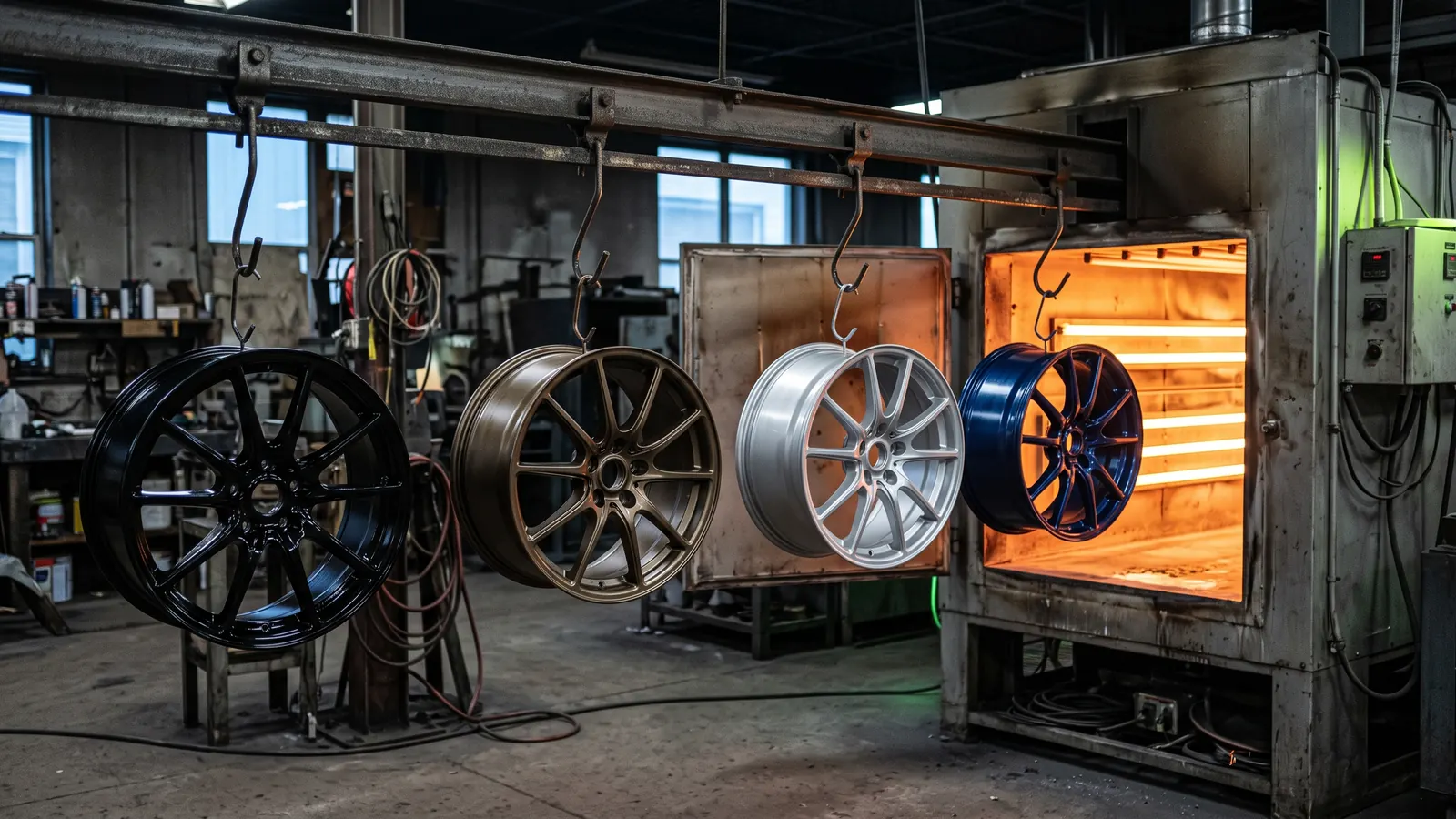
Ask anyone who drives in Boston and they will tell you the city is rough on cars. Tight streets, granite curbs, constant construction and some of the worst pothole seasons in New England mean wheels take hits that drivers in quieter towns rarely see. Add a long winter of road salt and it is no surprise so many Boston cars roll around on rashed, peeling or corroded rims.
This guide covers what Boston driving does to wheels, how to slow that damage down, and what a real repair and powder coat involves. To be upfront: our shop is in Warwick, Rhode Island, and that is where all of the work is done. Plenty of Greater Boston drivers make the trip because they want the job done properly, and we will explain exactly how that works.
How Boston streets wear down wheels
The biggest culprit is the curb. Boston uses a lot of granite curbing, and granite does not give. Parallel parking in the South End, Back Bay, Beacon Hill or Southie, often with a car close behind you, is exactly how wheel lips get ground down. One bad scrape can take a chunk out of an alloy wheel and break through the factory finish.
Potholes are the other half. Freeze and thaw cycles open up roads every late winter, and heavily used routes like Storrow Drive, Morrissey Boulevard, the streets around the Expressway and the Mass Pike ramps tend to break up fast. Hitting one at speed can bend a rim or crack a spoke, and low profile tires give the wheel very little cushion.
Construction plates, raised utility covers and uneven patches add to it. Over a few years of daily commuting, a set of wheels can collect more damage than you realize until you see them side by side under good light.
Winter salt, brake dust and corrosion
Massachusetts roads are treated heavily with salt and brine through the winter. That film sticks to wheels and works its way into every chip and scratch. Once moisture and salt get under the edge of the finish, corrosion starts to spread underneath, which is the white, bubbled look you see on a lot of older factory wheels.
Brake dust speeds this up. It holds moisture against the surface and bakes onto the inner barrel and spokes. City driving, with constant braking at lights and in traffic, produces a lot of it.
When corrosion has already lifted the finish, no cleaner will fix it. The wheel needs to be stripped back to bare metal and refinished, and powder coat is one of the most durable options for that.
Practical care for Boston wheels
Rinse your wheels regularly during salt season, not only in spring. A self serve wash every week or two, focused on the barrel and behind the spokes, removes most of the salt film before it can do much harm. Many Boston drivers skip winter washing entirely, and that is when the worst corrosion takes hold.
Use a pH balanced wheel cleaner and a soft brush. Strong acid cleaners and stiff brushes slowly break down any finish. Check tire pressure monthly, since a properly inflated tire protects the rim much better when you hit an unavoidable pothole.
When you parallel park, give the curb a little extra room on the passenger side. It sounds obvious, but most of the curb rash we repair happens at low speed, a few inches at a time.
Cosmetic damage versus structural damage
Curb rash, scratches, faded paint and surface corrosion are cosmetic. They are worth fixing because corrosion keeps spreading, but the wheel is still structurally sound.
A new vibration after a pothole, a tire that slowly loses air, or a visible crack on the inner barrel are more serious. Those can mean a bent or cracked wheel. Some cracked aluminum wheels can be welded and restored when the crack is in a safe spot, but some cannot, and in those cases replacing the wheel is the right call. We would rather tell you that than coat over a wheel that should not be on the road.
A couple of clear photos, one of the face and one of the inner barrel, usually tell us which kind of damage you have.
What happens during repair and powder coating
The tire comes off first, along with the TPMS sensor and wheel weights, because sensors cannot go into the curing oven. The wheel is stripped and media blasted to bare metal so the new finish bonds to clean aluminum.
Curb rash and gouges are repaired before any coating goes on. Cast wheels are typically preheated to let trapped gases escape so the finish does not bubble. The powder is then applied electrostatically and cured at around 400°F, which leaves a hard, even shell that handles salt and brake dust better than most spray paint.
After curing, the tire is remounted, the sensor reinstalled and the wheel balanced. Color options come from the Prismatic Powders library, which covers thousands of colors and finishes, and we can also match a custom color.
Choosing a finish that suits city driving
Color choice is personal, but some finishes are more forgiving in Boston conditions than others. Satin and matte finishes hide light brake dust and minor water spots better than high gloss, which shows every streak. Darker colors like gloss or satin black look sharp, but they also show salt film quickly, so they reward regular rinsing.
Silver and gunmetal shades are the most forgiving overall. They hide dust, look clean between washes and are close to what many cars came with from the factory. If you want something bolder, a clear top coat over a custom color adds a layer of protection against chips from road debris.
If you are matching the wheels to calipers, trim or a specific factory color, a custom color match is worth asking about. Send a photo of what you want to match and we can tell you what options are realistic.
How Boston drivers get the work done in Warwick, RI
All of our repair and coating work happens at our shop at 100 Minnesota Ave in Warwick, RI. From downtown Boston that is roughly 60 miles, usually somewhere around an hour to an hour and a half via I-93 South and I-95 South, depending heavily on traffic. Shop hours are Monday to Friday, 8:00 AM to 4:30 PM.
Because of the drive, most Boston customers plan ahead. Some drop off a set of wheels and tires out of the car, which lets you keep driving on your spare set or winter wheels while the work is done. Others bring the car down and arrange a ride. If you have a body shop or dealer you work with, they sometimes coordinate drop off for their customers too.
Before you make the trip, text us photos of the wheels for a free quote. That way you know what the job involves and what the price depends on before you get on the highway.
Frequently asked questions
- Do you have a location in Boston?
- No. All repair and powder coating work is done at our shop in Warwick, Rhode Island. Boston drivers drop off wheels there, usually after texting photos for a free quote first.
- How far is the Warwick shop from Boston?
- Roughly 60 miles from downtown Boston, typically about an hour to an hour and a half via I-93 South and I-95 South, depending on traffic.
- What does wheel powder coating usually cost?
- Across the region, most shops typically charge somewhere around $100 to $200 per wheel for standard powder coating, with repairs, custom colors and larger wheels adding to that. The only way to get an exact number is to bring the wheels to the shop, but a photo gets you a free ballpark quote first.
- Can a pothole bent rim be repaired?
- Often, yes. Many bent alloy wheels can be straightened and refinished. A wheel that is cracked needs a closer look, because some cracks can be welded safely and others mean the wheel should be replaced.
- Is powder coat worth it for a car that sees Boston winters?
- For most daily drivers, yes. Powder coat is thicker and harder than typical spray paint, so it resists chips, salt and brake dust better. Regular rinsing during salt season still helps it last.
Found this helpful? Make us a preferred source on Google.
Want a price for your wheels or parts?
Send a photo for a free ballpark quote. The final price is set when we see the part at the Warwick shop.