
Wheel Repair and Powder Coating in Cambridge, MA: What Drivers Should Know
· By Fabiano Pereira
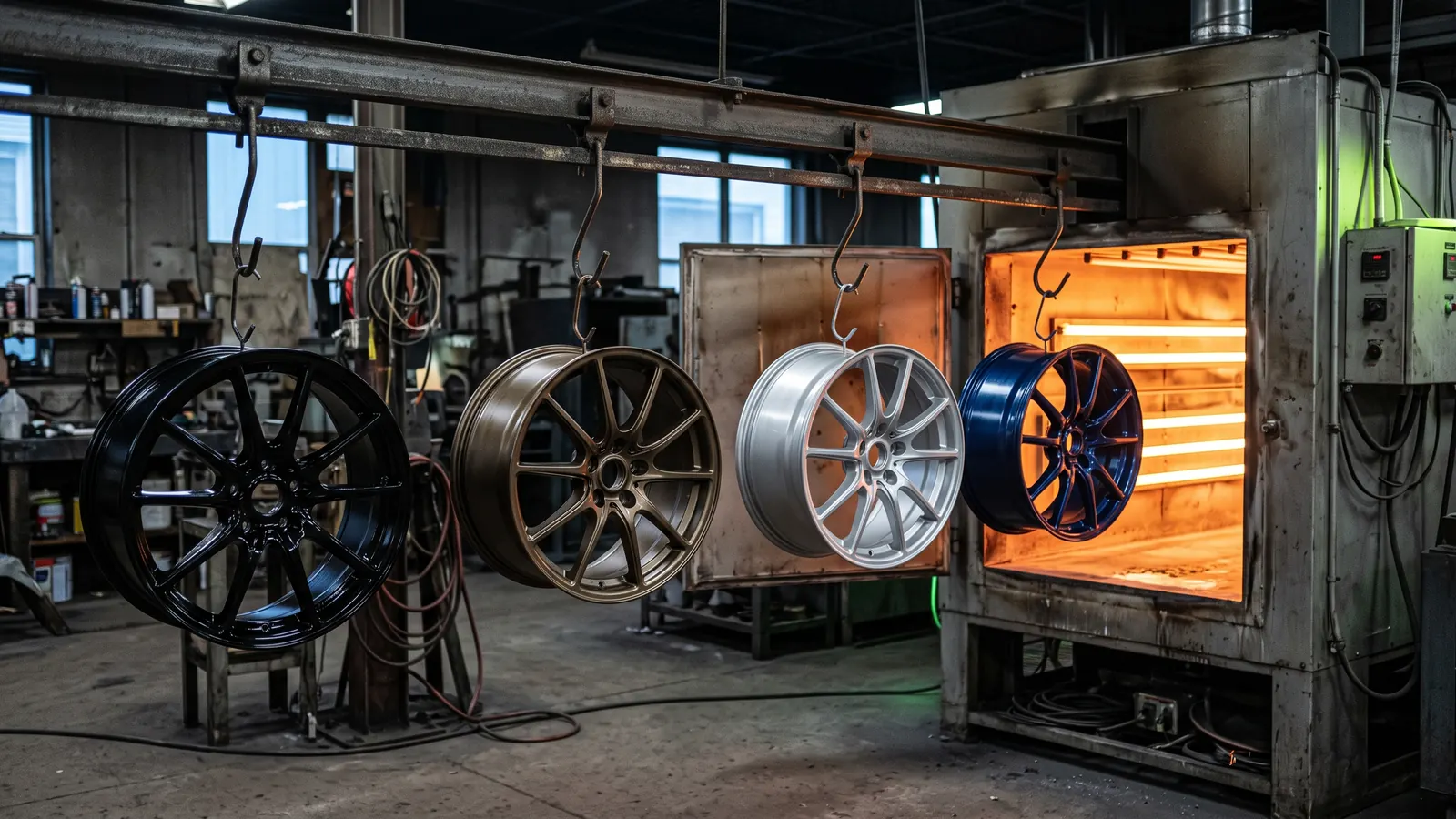
Driving in Cambridge is its own skill. Narrow one way streets, resident permit parking packed bumper to bumper, granite curbs, brick crosswalks and a growing network of separated bike lanes with concrete curbs and flexible posts all make it easy to scrape a wheel without ever doing anything reckless. Most of the Cambridge wheels we see were damaged at five miles per hour, not fifty.
This guide explains what Cambridge streets do to wheels, how to keep the damage under control, and what a real repair and powder coat involves. To be upfront: all of our work is done at our shop in Warwick, Rhode Island. We do not have a Cambridge location, and below we explain how Cambridge drivers usually handle the trip.
Curbs, bike lanes and tight parking
Most Cambridge curb rash comes from parking. Streets around Harvard Square, Central Square, Inman and the side streets off Massachusetts Avenue and Cambridge Street leave very little room, and you are often parallel parking with traffic waiting behind you. The passenger side wheels, the ones you cannot see, take the hits.
Separated bike lanes add a newer kind of damage. Raised lanes and concrete or granite barriers along streets like Mass Ave and Brattle Street mean there is a hard edge where there used to be open pavement. Clipping one while turning or pulling in is an easy way to gouge a wheel lip or, at worse angles, bend the rim.
None of this is a complaint about the bike lanes. It is simply the reality of driving in a dense, older city, and it is why so many Cambridge cars have rashed wheels within a year or two of ownership.
Potholes, brick and the river roads
Cambridge also gets its share of freeze and thaw damage. Memorial Drive along the Charles, the approaches to the BU Bridge and the Longfellow, and the busier stretches of Alewife Brook Parkway and Fresh Pond Parkway all develop potholes in late winter. A deep one at speed can bend a rim or knock the wheel out of round, which you will feel as a vibration on the highway.
Brick crosswalks, older patched streets and raised utility covers around Kendall and Central add smaller jolts. Each one is minor on its own, but over thousands of short trips they wear on wheels and finishes.
If a vibration showed up right after one hit, or a tire started slowly losing air, have the wheel checked. Those are the classic signs of a bend or a crack rather than cosmetic damage.
EVs and heavier cars need extra attention
Cambridge has a lot of electric vehicles, and EVs are hard on wheels in a specific way. They are heavier than most gas cars of the same size, they often run large wheels with very low profile tires, and many come with aero wheels or plastic covers that hide damage underneath. Extra weight means more force goes into the rim when you hit a pothole or a curb.
EVs also produce less brake dust because regenerative braking does much of the slowing, which is good news for the finish. The tradeoff is that curb damage tends to be the main problem, and on large diameter wheels it is very visible.
Repair and powder coating work on EV wheels follows the same steps as any alloy wheel, with care around the TPMS sensors, which come out before the wheel goes in the oven. If your car uses aero covers, mention that when you send photos so we know what we are looking at.
Salt, brine and corrosion under the finish
Massachusetts roads are treated with salt and brine all winter, and Cambridge is no exception. That film clings to wheels and gets into every chip left by a curb strike. Once moisture and salt reach the aluminum under the coating, corrosion starts and spreads underneath, lifting the finish from the inside.
That is why a wheel can look fine one spring and be peeling the next. By the time the white, bubbled corrosion is visible, cleaning will not fix it. The wheel needs to be stripped back to bare metal and refinished.
Rinsing the wheels every week or two during the salt season, with a pH balanced cleaner and a soft brush, slows this down a lot. For drivers parked on the street all winter, it is the single most useful habit.
What a proper repair and powder coat involves
The tire comes off, along with the TPMS sensor and wheel weights. The wheel is stripped and media blasted down to bare metal so the new finish bonds to clean aluminum. Curb rash and gouges are repaired before coating, and bent wheels are straightened where that is possible.
Cast wheels are usually preheated so trapped gases escape before coating, which prevents bubbles in the finish. The powder is applied electrostatically and cured at around 400°F, leaving a hard, even layer that resists chips, salt and brake dust better than most spray paint.
After curing, the tire is remounted, the sensor reinstalled and the wheel balanced. Colors come from the Prismatic Powders library, which covers thousands of colors and finishes, and custom color matching is available if you want to match a factory shade.
Picking a finish that forgives city driving
Color is personal, but some finishes are easier to live with on a Cambridge street car than others. Satin and matte finishes hide light dust and water spots better than high gloss, which shows every streak. Silver, gunmetal and graphite shades are the most forgiving, and they are close to what many cars come with from the factory.
Gloss black looks sharp, but it shows salt film and brake dust quickly, so it rewards regular rinsing. If you want a bolder color, a clear top coat over it adds a layer of protection against chips from road debris and the occasional curb.
If you are matching wheels to calipers or a factory trim color, send a photo of what you want to match. We can tell you what is realistic from the color library or with a custom match.
How Cambridge drivers get the work done in Warwick, RI
All repair and coating happens at our shop at 100 Minnesota Ave in Warwick, RI. From Cambridge that is roughly 60 to 65 miles, typically somewhere around an hour and a quarter to an hour and a half via I-93 South and I-95 South, and more at rush hour. Shop hours are Monday to Friday, 8:00 AM to 4:30 PM.
Many Cambridge residents do not have a garage or a spare set of wheels, so planning matters. Some drivers bring the car down and arrange a ride back. Others who have a second set, or space to store wheels, bring the wheels in out of the car. If you work with a body shop or dealer, they sometimes coordinate drop off for their customers.
Before you make the drive, text photos of the wheels to (617) 797-0029 for a free ballpark price. The final price is set once the wheels are at the shop, since some damage only shows up in person. The company has been in business for more than 20 years, and if the finish is not right, we redo it at no cost. Payment is by credit card, cash, check, Zelle or bank transfer.
Frequently asked questions
- Do you have a location in Cambridge?
- No. All of the work is done at our shop in Warwick, Rhode Island. Cambridge drivers usually text photos first, then bring the car or the wheels down to Warwick.
- How far is the Warwick shop from Cambridge?
- Roughly 60 to 65 miles, typically about an hour and a quarter to an hour and a half via I-93 South and I-95 South, depending on traffic.
- Can you repair curb rash on EV wheels?
- Yes, in most cases. EV wheels are alloy wheels like any other, so curb rash can be repaired and the wheel refinished. The TPMS sensor is removed before the wheel goes in the curing oven.
- Will a photo give me an exact price?
- A photo gets you a free ballpark price. The final price is set when the wheels are at the shop, because things like cracks, bends or deep corrosion are easier to judge in person.
- Is powder coat a good choice for a car parked on the street?
- For most drivers, yes. Powder coat is thicker and harder than typical spray paint, so it holds up better to curb scrapes, salt and brake dust. Rinsing during salt season still helps it last.
Found this helpful? Make us a preferred source on Google.
Want a price for your wheels or parts?
Send a photo for a free ballpark quote. The final price is set when we see the part at the Warwick shop.