
Wheel Repair and Powder Coating for Connecticut Drivers: A Statewide Guide
· By Fabiano Pereira
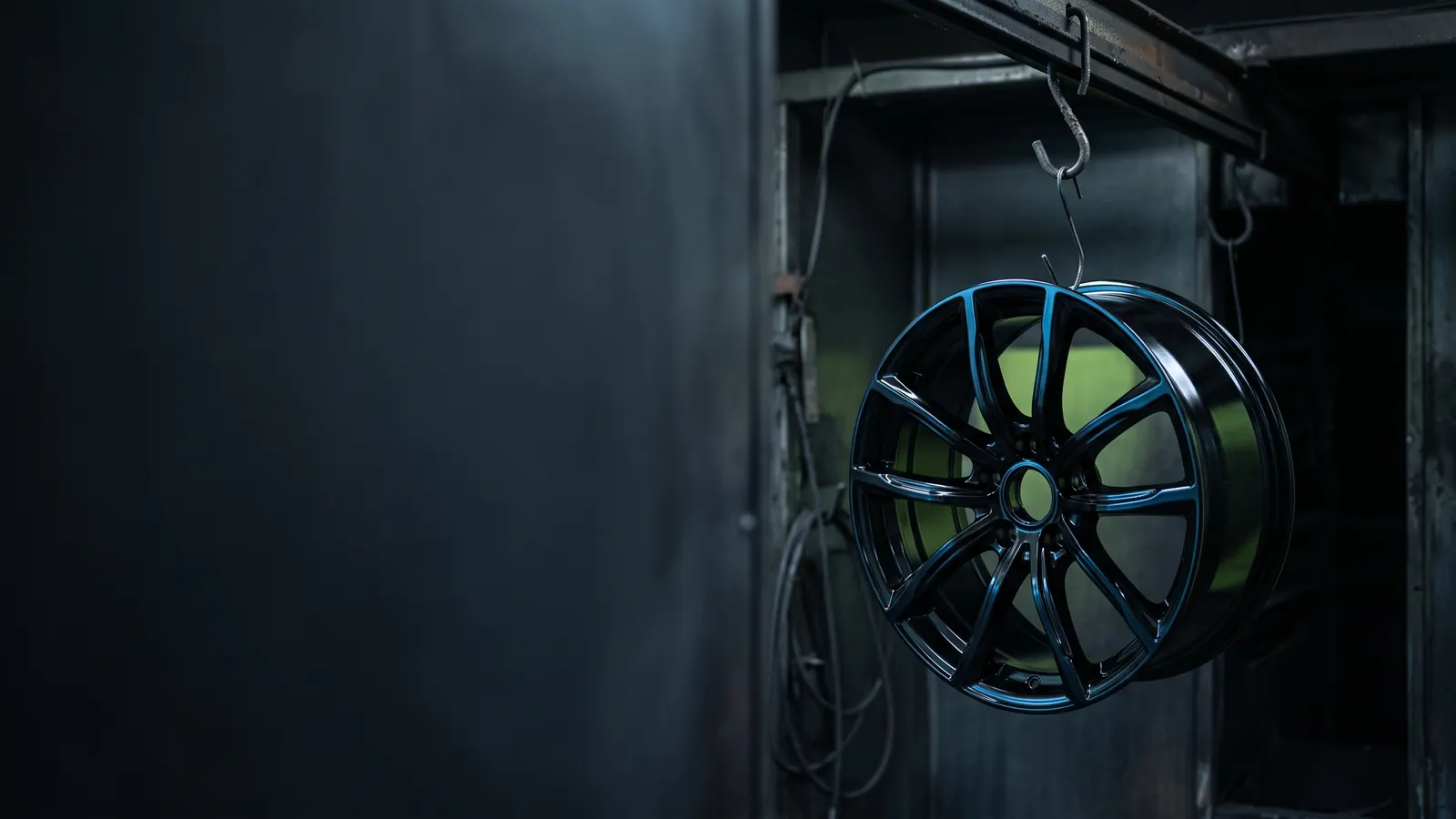
Connecticut drivers know what a New England winter does to a car. Between I-95 along the shoreline, I-395 through the eastern part of the state and I-84 through Hartford, a lot of daily miles happen on busy, heavily treated highways. Add pothole season, tight parking in older downtowns like Norwich and New London, and years of road salt and liquid deicers, and wheels take a steady beating.
This guide is for Connecticut drivers, especially in the eastern and central parts of the state, who want to understand what is happening to their wheels and what a proper repair and powder coat involves. Our shop is in Warwick, Rhode Island, and that is where every job is done. For a lot of eastern Connecticut, Warwick is a reasonable drive, and we will explain how that works below.
How Connecticut roads wear down wheels
Highway miles are a big part of it. Commuting on I-95 between Groton, Mystic and New Haven, or on I-84 and I-91 around Hartford, means constant exposure to road spray, grit and debris. At highway speed, even small stones can chip a wheel finish, and every chip is a place where corrosion can start.
Potholes are the other big factor. Freeze and thaw cycles open up pavement every late winter, and both state highways and local roads break up. Older downtown streets in places like Norwich, Willimantic and New London often have rough patches, steep curbs and tight parking, which add curb rash to the list. A hard pothole hit on a low profile tire can bend a rim or crack a spoke.
Rural roads in the Quiet Corner, around Putnam, Danielson and Killingly, bring their own wear: frost heaves, broken edges and long stretches of treated pavement. Different roads, same result: wheels age faster than most drivers expect.
Deicers, salt and corrosion
Connecticut has used a mix of salt, sand and liquid deicers on its roads over the years, and many drivers and mechanics associate the liquid treatments with aggressive corrosion on wheels, brake parts and undercarriages. Whatever the exact mix on your route, the effect on wheels is similar. A wet, salty film clings to the barrel and spokes and works into any chip in the finish.
Once moisture gets under the edge of a chip, corrosion spreads underneath and lifts the finish. That is the white, bubbled look common on older factory wheels. Brake dust speeds it up by holding moisture against the surface.
When the finish has already lifted, cleaning will not stop it. The wheel needs to be stripped to bare metal and refinished. Powder coat is thicker and harder than typical spray paint, which makes it a good fit for wheels that see Connecticut winters.
Care tips for Connecticut drivers
Rinse your wheels every week or two during the treated road season, not only in spring. Aim into the barrel and behind the spokes, where salt and deicer residue collect. Use a pH balanced wheel cleaner and a soft brush, and avoid harsh acid cleaners that can etch the finish.
Check tire pressure monthly, because cold weather lowers it and an underinflated tire protects the rim much less in a pothole. If you have a separate set of winter wheels, use them. Keeping your nicer wheels out of the winter entirely is the single best way to protect them.
Along the shoreline, salt air adds a little extra exposure even outside of winter, so a quick rinse after a trip to the beach or a ride near the water does not hurt.
Cosmetic or structural damage?
Curb rash, scratches, peeling clear coat and surface corrosion are cosmetic. The wheel is still sound and can be repaired and refinished.
A vibration after a pothole, a tire that slowly loses air, or a visible crack on the inner barrel can point to a bent or cracked wheel. Many bent alloy wheels can be straightened. Some cracked aluminum wheels can be welded when the crack is in a safe place, but some cannot, and in that case replacement is the right answer. We will tell you honestly which one you have.
A couple of clear photos, one of the face and one of the inner barrel, are usually enough to tell the difference. If the wheel came off a car that also has corroded calipers, a shot of those helps too, since many drivers refinish both at the same time so everything matches when it goes back together.
What a proper repair and powder coat involves
The tire comes off, along with the TPMS sensor and wheel weights, because sensors cannot go through the curing oven. The wheel is stripped and media blasted to bare metal, so the new finish bonds to clean aluminum.
Damage is repaired before coating. Cast wheels are typically preheated to release trapped gases so the finish does not bubble. The powder is applied electrostatically and cured at around 400°F, forming a hard, even shell. After curing, the tire is remounted, the sensor reinstalled and the wheel balanced.
Colors come from the Prismatic Powders library, which includes thousands of colors and finishes, and custom color matching is available. We have been doing this work for more than 20 years, and if the finish is not right, we redo it at no cost.
Typical cost and quotes
Most shops in New England typically charge somewhere around $100 to $200 per wheel for standard powder coating on a common size. Repairs, larger wheels, two tone finishes and custom colors usually add to that.
A photo gets you a free ballpark price, which helps you decide if the job and the drive make sense. The final price is set once the wheels are at the shop and can be inspected up close. We accept credit card, cash, check, Zelle and bank transfer.
Getting from Connecticut to our Warwick, RI shop
All work is done at our shop at 100 Minnesota Ave in Warwick, RI, open Monday to Friday, 8:00 AM to 4:30 PM. Drive times vary a lot by where you start. From the southeastern shoreline, around Mystic, Groton and New London, it is often somewhere around 45 minutes to an hour north on I-95. From Norwich and the I-395 corridor, many drivers head north and then east into Rhode Island, often in the range of an hour or a little more. From the Hartford area, expect roughly an hour and a quarter to an hour and three quarters depending on route and traffic.
Because of the distance, most Connecticut customers bring the wheels and tires off the car, or bring the car down and arrange a ride. Many combine trips, since we also coat motorcycle parts, boat and marine parts, patio furniture, iron railings and home radiators. Boat owners along the shoreline in particular often have marine parts or metal brackets that can go in the same visit.
Before you plan the drive, text us photos for a free ballpark quote, so you know what is involved before you head to Rhode Island.
Frequently asked questions
- Do you have a shop in Connecticut?
- No. All repair and powder coating work is done at our shop in Warwick, Rhode Island. Connecticut drivers bring their wheels and parts there.
- How far is Warwick from eastern Connecticut?
- It depends on where you start. From the Mystic, Groton and New London area it is often around 45 minutes to an hour via I-95. From Norwich and the I-395 corridor it is often around an hour, and from Hartford roughly an hour and a quarter or more, depending on traffic.
- Can I get a quote before driving to Rhode Island?
- Yes. Text us photos for a free ballpark price. The final price is set once the wheels or parts are at the shop and can be inspected.
- Do you powder coat boat and marine parts?
- Yes. Along with wheels and brake calipers, we coat boat and marine parts, motorcycle parts, patio furniture, iron railings, home radiators and bulk metal parts for businesses.
- Will powder coat hold up to Connecticut road treatments?
- For most daily drivers, yes. Powder coat is thicker and harder than typical spray paint, so it resists chips, salt and brake dust better. Regular rinsing during winter still helps it last.
Found this helpful? Make us a preferred source on Google.
Want a price for your wheels or parts?
Send a photo for a free ballpark quote. The final price is set when we see the part at the Warwick shop.