
Wheel Repair and Powder Coating in Newton, MA: What Owners Should Know
· By Fabiano Pereira
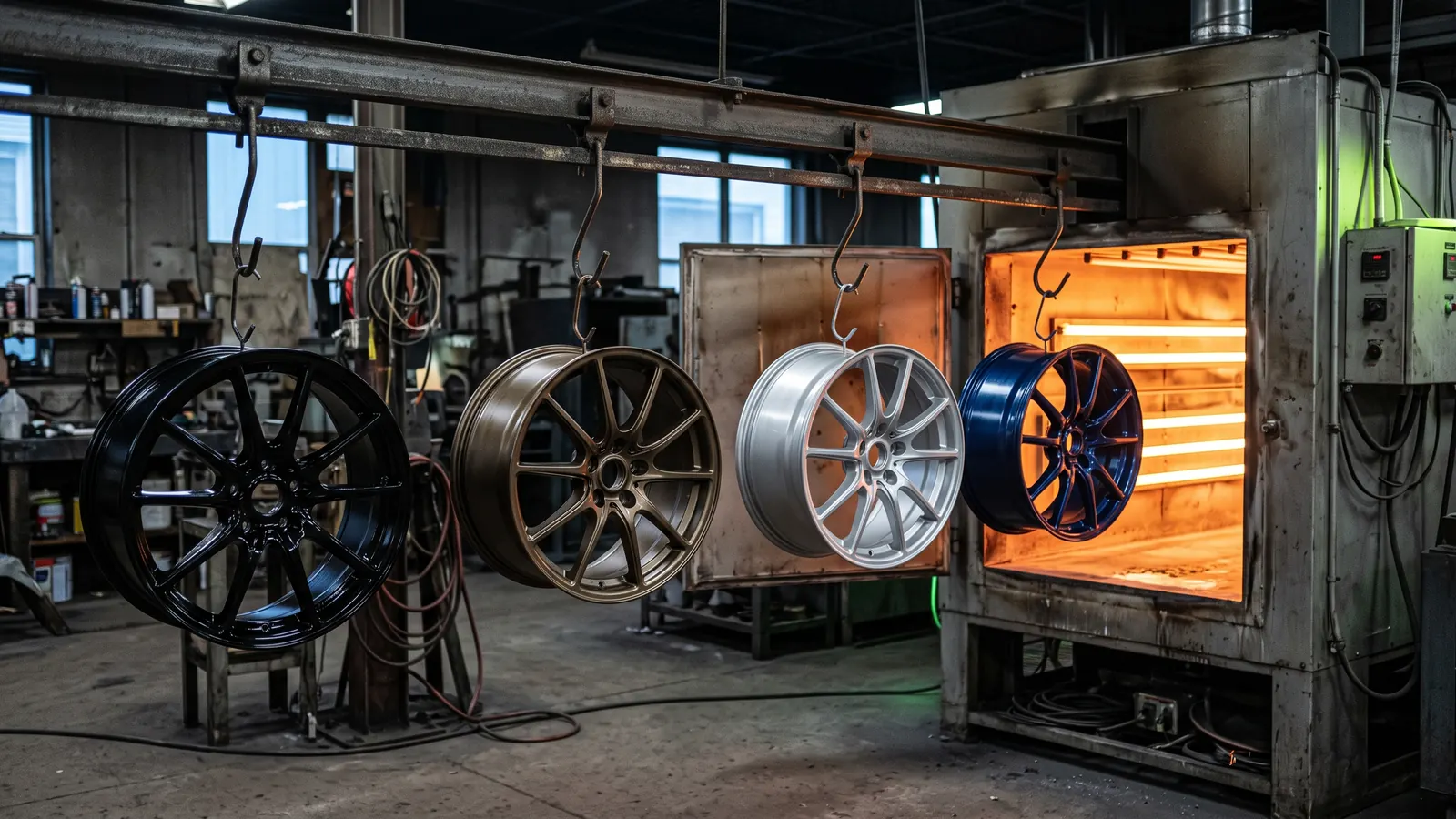
Newton is not the first place people think of when they picture rough roads, but its wheels see plenty of wear. The city is hilly, its villages are connected by busy roads like Route 9, Commonwealth Avenue and Washington Street, and the Mass Pike and Route 128 run right through it. A lot of Newton driveways hold SUVs and luxury cars on large diameter alloy wheels with thin tires, and those wheels are expensive to replace and easy to damage.
This guide covers what Newton driving does to wheels, how to keep large alloys looking right, and what a real repair and powder coat involves. Our shop is in Warwick, Rhode Island, where all the work is done. We have been at this for more than 20 years, and Newton drivers who want a durable, properly done finish make the drive. Here is what to expect.
How Newton roads damage wheels
Large wheels with low profile tires look great, but they leave very little rubber between the rim and the road. When a 20 inch wheel hits a pothole on Route 9 or a broken patch on Washington Street, the tire sidewall has almost no room to absorb it, and the rim takes the impact directly. Bent inner lips and slow leaks after pothole season are common on those setups.
Curbs are the other issue. Parking in the village centers, like Newton Centre, Newtonville and West Newton, means tight angled and parallel spots near curbs. Tight driveways and garage entries add their own risk, especially on wide wheels that stick out past the tire. Scuffs from automated car washes with guide rails are another source of rash we see often.
The hills matter too. Commonwealth Avenue through Heartbreak Hill and the climbs around Chestnut Hill and Waban mean more braking on the way down, which means more brake dust on the wheels. That dust holds moisture and salt against the finish, and it bakes onto the inner barrel over time.
Winter salt and the factory finish
Like the rest of Massachusetts, Newton's roads are treated with salt and brine all winter. Hills get extra attention from road crews, which means more salt exposure on the routes many residents drive daily. That film works its way into any chip or scratch in the finish.
Many modern wheels, especially on premium cars, come with machined faces or thin clear coats that look striking when new but do not hold up well once they are chipped. Moisture gets under the clear, and you start seeing a cloudy, spidery corrosion spreading across the face. Once it starts, washing will not stop it.
The fix at that point is to strip the wheel to bare metal and refinish it. Powder coat is thicker and harder than most factory clear coats and spray paints, which is why many owners choose it when they refinish a set they plan to keep.
Protecting large alloy wheels
Keep tire pressure where the door sticker says, and check it monthly, especially as temperatures drop in fall. Low pressure on a low profile tire is the fastest way to bend a wheel. If your car came with an optional larger wheel, it is worth knowing that a smaller wheel with a taller tire is much more forgiving for a winter set.
Rinse wheels during salt season with a pH balanced cleaner and a soft brush. Avoid strong acid cleaners, which can etch both factory finishes and powder coat over time. If you use automated washes, a touchless wash is gentler on wide wheels than one with guide rails.
Many Newton drivers run a separate set of winter wheels and tires. That is a good habit. It keeps your nicer wheels out of the salt entirely, and it also makes refinishing easier, since you can drop off the summer set without leaving the car.
Is it a repair, a refinish or a replacement?
Curb rash, scratches, peeling clear coat and surface corrosion are cosmetic. They can be repaired and refinished, and the wheel is still structurally sound.
A new vibration after a pothole, a tire that keeps losing air, or a visible crack on the inner barrel are different. Those can mean a bent or cracked wheel. Many bent wheels can be straightened, and some cracks in aluminum wheels can be welded when they are in a safe location. Some cannot, and replacement is the right call. Given what large wheels cost new, it is worth getting an honest look before you order a replacement.
A couple of clear photos, one of the face and one of the inner barrel, usually tell us what you are dealing with.
How the work is done
The tire comes off, along with the TPMS sensor and wheel weights, since sensors cannot go through the curing oven. The wheel is stripped and media blasted to bare metal so the new coating bonds to clean aluminum.
Damage is repaired before any coating goes on. Cast wheels are typically preheated to release trapped gases so the finish does not bubble. The powder is applied electrostatically and cured at around 400°F, which leaves a hard, even shell. After curing, the tire goes back on, the sensor is reinstalled and the wheel is balanced.
Colors come from the Prismatic Powders library, with thousands of colors and finishes, and we can custom match a color if you want the wheels to tie into trim or calipers. If the finish is not right, we redo it at no cost.
Typical cost for larger wheels
Most shops in the region typically charge somewhere around $100 to $200 per wheel for standard powder coating on a common size. Larger diameters, straightening, crack welding, two tone finishes and custom colors usually add to that, so a set of 20 inch wheels with repairs will land higher than a basic refinish.
A photo gets you a free ballpark price. The final price is set once the wheels are at the shop, where we can see the inner barrel and everything a photo misses. We accept credit card, cash, check, Zelle and bank transfer.
Getting your wheels to Warwick, RI
All work is done at our shop at 100 Minnesota Ave in Warwick, RI. From Newton it is roughly 55 miles, usually around an hour via I-95 and Route 128 South, though Route 128 traffic can easily stretch that. Shop hours are Monday to Friday, 8:00 AM to 4:30 PM.
Most Newton customers bring the wheels and tires off the car, especially if they have a winter set to drive on. Others bring the whole car and arrange a ride. If you have other metal items that could use a fresh finish, like patio furniture, iron railings or home radiators, we coat those too, so it can make sense to bring them on the same trip.
Start by texting us photos for a free ballpark quote, so you know what is involved before you make the drive.
Frequently asked questions
- Do you pick up or work on wheels in Newton?
- No. All repair and powder coating work is done at our shop in Warwick, Rhode Island. Newton drivers bring wheels there after texting photos for a free ballpark quote.
- How far is Warwick from Newton?
- Roughly 55 miles, typically about an hour via I-95 and Route 128 South, longer in heavy traffic.
- Can large 20 inch or 22 inch wheels be powder coated?
- Yes, in most cases. Larger wheels follow the same process. They usually cost more than smaller wheels because of size and the repairs they tend to need.
- Is a bent low profile wheel worth repairing?
- Often, yes. Many bent alloy wheels can be straightened and refinished for less than a new wheel. Cracked wheels need a closer look, since some cracks can be welded safely and some cannot.
- Can I get an exact quote from a photo?
- A photo gets you a free ballpark price. The final price is set once the wheels are at the shop and can be inspected up close.
Found this helpful? Make us a preferred source on Google.
Want a price for your wheels or parts?
Send a photo for a free ballpark quote. The final price is set when we see the part at the Warwick shop.