
Repair, Refinish, or Replace? What to Consider Before Upgrading Your Wheels
· By Fabiano Pereira
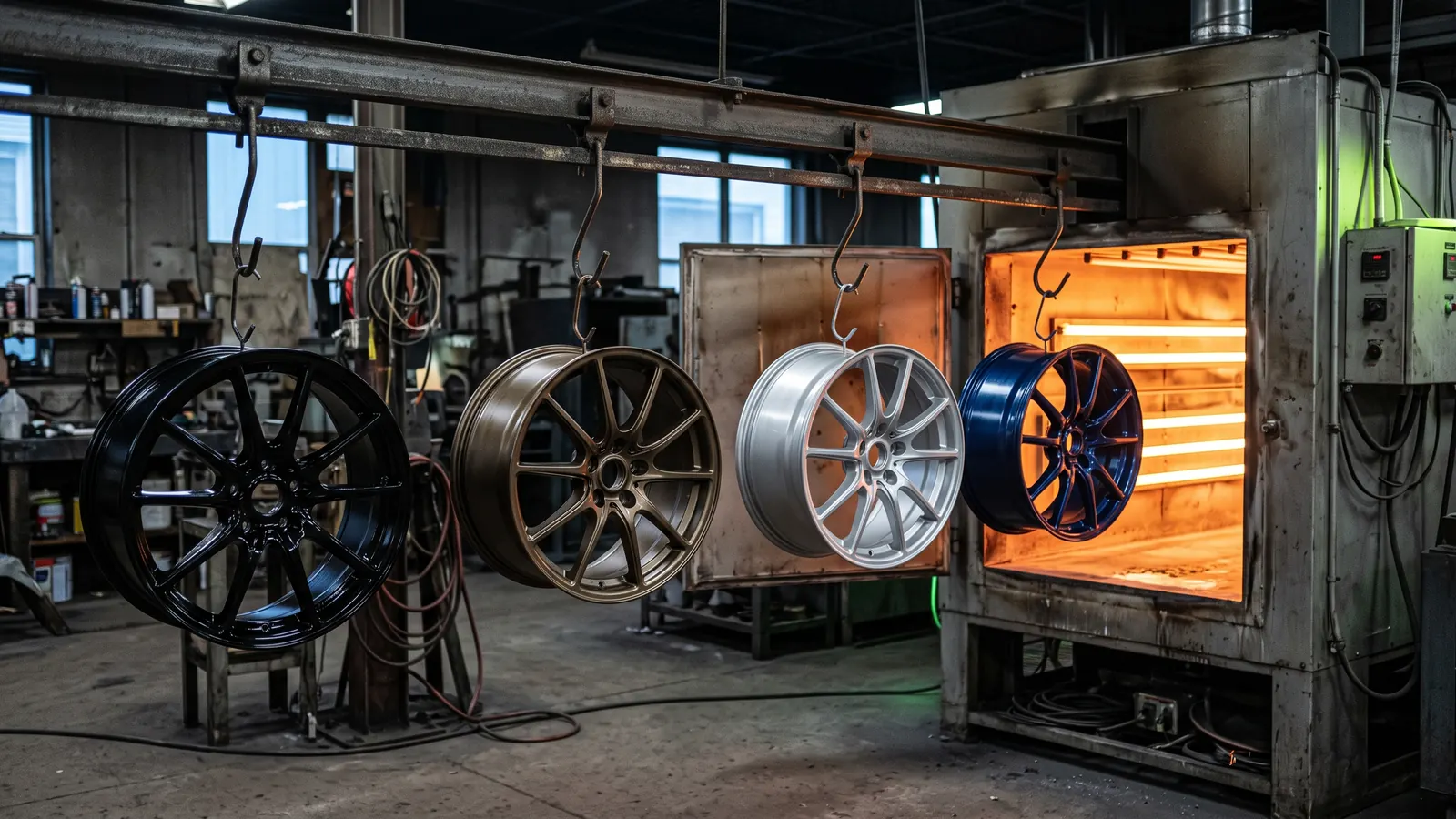
When your wheels start looking rough, the first instinct is often to shop for new ones. Sometimes that is the right move. But a lot of people spend $1,500 or more on a new set when their original wheels needed a couple of repairs and a fresh finish to look better than new.
This guide breaks the decision into three clear options: repair, refinish, and replace. For each one, you will see what it fixes, what it does not, roughly what it costs, and the signs that point to it. By the end you should know which path makes sense for your wheels and your budget.
Option 1: Repair (Fix the Damage)
Rim repair is about fixing a specific problem. That can be curb rash on the lip, a bend from a pothole, or a crack in the barrel. The goal is to make the wheel structurally sound and round again, and to make the damaged area look right.
Repair is the right call when the wheel is in good shape overall except for one or two problem spots. A bent wheel that causes a highway vibration can often be straightened. A barrel crack in a non-structural area can often be welded. Curb rash can be sanded, filled, and blended.
As a rough guide, many shops charge somewhere around $75 to $175 for cosmetic curb rash repair per wheel, and roughly $100 to $250 or more for straightening or crack welding, depending on severity. Treat those as ballpark figures, not quotes.
Option 2: Refinish (Make the Whole Wheel New Again)
Refinishing addresses the surface of the entire wheel. The tire comes off, the old finish is stripped by chemical stripping or media blasting, any damage is repaired, and a new finish goes on. Powder coating is the most durable choice for this, because the powder is applied electrostatically and then cured in an oven at around 400°F, forming a hard, even layer that resists chips, brake dust, and road salt far better than spray paint.
Refinish when the wheel is structurally fine but the finish is failing: clear coat peeling, paint bubbling around the lug holes, corrosion creeping in from the edges, faded or chalky color, or several spots of curb rash. Spot repairs on a wheel like that just move the problem around. A full strip and recoat gives you one clean, consistent surface.
Refinishing is also the cheapest way to change the look of your car. Since the wheel is stripped to bare metal anyway, you can go back to factory silver or choose something completely different. Our Warwick, RI shop uses the Prismatic Powders color library, which covers thousands of colors and finishes, from gloss black and bronze to candy and textured finishes. Many shops charge somewhere around $100 to $200 per wheel for a powder coat refinish, depending on size, condition, and color.
Option 3: Replace (When the Wheel Is Done)
Some wheels should not be saved. Cracks in spokes, near the hub, or around the lug holes are in structural areas, and most reputable shops will not weld them. Wheels with multiple cracks, a severe bend combined with a crack, deep corrosion that has thinned the metal, or a previous weld in the same spot are also replacement candidates.
Replacement also makes sense when you genuinely want a different wheel, not just a different color. If you want a larger diameter, a wider wheel for a different tire, a different offset for stance, or a lighter forged design, refinishing your current wheels will not get you there.
Keep in mind that new is not automatically better. Many inexpensive aftermarket wheels come with a thin finish that will not survive a few New England winters as well as a properly powder coated OEM wheel. A quality OEM wheel is often a better starting point than a cheap replacement.
A Quick Decision Checklist
Ask yourself four questions. First, is there any crack or bend? If yes, start there: that is a repair question, and possibly a replace answer. Second, is the problem one spot or the whole wheel? One spot points to repair, the whole wheel points to refinish. Third, do you like the wheel design itself? If yes, refinishing gives you a like-new wheel for much less than buying new. Fourth, do you want a different size or style? If yes, you are shopping for new wheels regardless.
Most cars we see fall into the middle: original wheels with a few years of curb rash, salt damage around the lug nuts, and maybe one bend from a pothole. For those, repair plus a full powder coat refinish is usually the best value. You keep wheels that fit perfectly, you fix the actual damage, and you end up with a finish that is tougher than what came from the factory.
One more thing to check before deciding: how many wheels are affected. If only one wheel is damaged and the other three still look good, a repair plus a careful color match on that single wheel can work. But factory finishes fade at different rates, so a brand new finish on one wheel can stand out next to three that have seen a few winters. If the set is already uneven, refinishing all four at once usually gives the cleanest result, and the per-wheel cost often comes down when a full set is done together.
Thinking About Upgrading? Consider This First
If the real goal is to make the car look different, compare a color change on your current wheels against new wheels. A set of four powder coated wheels in a new color often costs a fraction of a quality new set, and you avoid fitment headaches with offset, center bore, and TPMS compatibility.
If you are buying new wheels anyway, consider having them powder coated before the first winter, or choosing a color that is applied as powder from the start. Fresh wheels pick up salt damage fast on Rhode Island and Massachusetts roads, and a thicker, cured finish protects the investment.
Also think about the old set. Repaired and refinished wheels make an excellent dedicated winter set. Put your snow tires on them, and save the nicer wheels for the warm months.
What Affects the Final Price
Size matters, since a 22 inch truck wheel takes more prep and powder than a 16 inch sedan wheel. Condition matters, because heavy corrosion or old layered paint takes more time to strip. Damage matters, since each bend or crack is separate work. Finish choice matters a little, as multi-stage colors like candies or two-tone looks add steps. And tires matter, because dismounting, remounting, and balancing are part of a proper job.
Because all of those vary, the most accurate way to price your wheels is to have someone look at them. Text us a photo of each wheel, including any damage up close, and we will give you a free quote and an honest opinion on whether repair, refinish, or replace makes the most sense.
Frequently asked questions
- Is it cheaper to refinish or replace rims?
- Refinishing is usually much cheaper. Many shops charge roughly $100 to $200 per wheel to powder coat, while a quality new wheel often costs several hundred dollars or more each. Replacement only makes sense when the wheel is structurally damaged or you want a different size or design.
- What is the difference between rim repair and refinishing?
- Rim repair fixes a specific problem such as curb rash, a bend, or a crack. Refinishing strips and recoats the entire wheel surface. Many wheels need both: the damage is repaired first, then the whole wheel is refinished so it looks consistent.
- Can I change my wheel color when I refinish?
- Yes. The wheel is stripped to bare metal during a refinish, so changing color costs about the same as restoring the original. Powder coat suppliers like Prismatic Powders offer thousands of colors and finishes.
- When should a damaged rim be replaced instead of repaired?
- Replace the wheel if it has cracks in a spoke, near the hub, or around the lug holes, multiple cracks, a severe bend combined with a crack, deep corrosion that has thinned the metal, or a previous weld in the same spot.
Found this helpful? Make us a preferred source on Google.
Want a price for your wheels or parts?
Send a photo for a free ballpark quote. The final price is set when we see the part at the Warwick shop.