
Wheel Repair and Powder Coating for Marlborough, MA Drivers and Riders
· By Fabiano Pereira
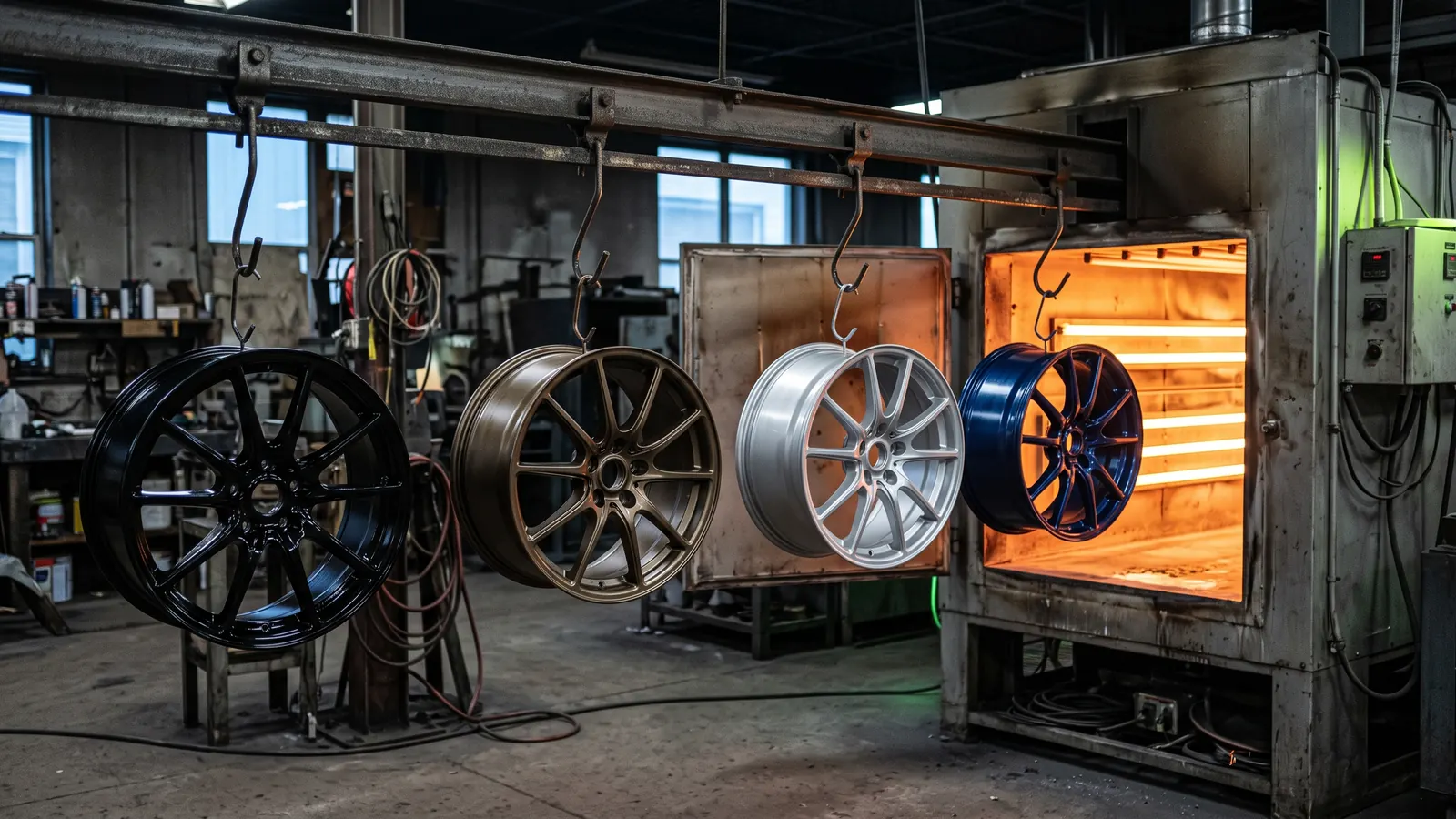
Marlborough is a highway town. With I-495, I-290 and the Mass Pike all close by, and Route 20 running straight through the middle of the city, a lot of local drivers put serious miles on their cars every week. Highway miles at speed, plus a hilly MetroWest winter full of salt and sand, wear wheels down in a different way than pure city driving does.
This guide covers what that kind of driving does to wheels, what you can do to slow it down, and what repair and powder coating actually involve. All of our work is done at our shop in Warwick, Rhode Island. It is a real drive from Marlborough, so we will be honest about that too and explain how people usually plan it.
How highway miles and hills wear down Marlborough wheels
At highway speed, a pothole does more damage than it would at 25 miles per hour in town. The ramps and merges around the I-495 and I-290 interchange, and the expansion joints and patched lanes on I-495 itself, are where a lot of bent rims come from. Low profile tires give the wheel very little cushion, so a sharp edge in the pavement goes straight into the rim.
Route 20 through downtown, Lincoln Street, Bolton Street and Route 85 bring the in town side of it: traffic lights, turning in and out of plazas, and pavement that breaks up after freeze and thaw cycles. Parking lots along Route 20 have their share of high concrete curbs and parking blocks, which are a classic source of curb rash.
The hills matter too. Marlborough and the surrounding towns have plenty of grades, which means more braking, more brake heat and more brake dust baked onto the wheels. That dust is a big part of why the inner barrels on so many MetroWest cars look rough even when the faces look fine.
Salt, sand and brake dust in a MetroWest winter
Inland Massachusetts towns often get more snow and colder nights than the coast, which means more treatment on the roads. Salt and brine coat the wheels, and sand mixed in can act like a mild abrasive on the finish. Once a curb scrape or stone chip breaks through the coating, salt and moisture get under the edge and corrosion starts to spread underneath.
Brake dust makes it worse. It holds moisture and salt against the metal, and on the inner barrel it can bake on so hard that ordinary wheel cleaner barely touches it.
Rinse the wheels every week or two during salt season, aimed into the barrel and behind the spokes. Use a pH balanced cleaner and a soft brush rather than strong acid products. And keep your tire pressure right, because a properly inflated tire protects the rim much better against an I-495 pothole.
Motorcycle wheels and parts after a riding season
Central Massachusetts has a lot of riders, and the back roads around Marlborough, Hudson, Berlin and Bolton get plenty of motorcycle traffic from spring to fall. Motorcycle wheels, frames, triple trees, brackets and engine covers all take road grime, brake dust and the occasional stone chip, and many riders like to refresh them over the winter while the bike is off the road.
We powder coat motorcycle parts along with car wheels. Parts are stripped and blasted to clean metal, then coated and cured into a durable finish. The off season is a natural time to do it, since the bike is already sitting and you can take things apart without losing riding days.
If you are planning a winter project, a photo of the parts and a quick list of what you want coated helps us give you a ballpark before you start unbolting anything.
Label and bag your bolts as you take things apart, and leave bearings, seals and rubber parts out of anything you bring in, since they cannot go through the oven. Telling us which surfaces need to stay bare, like mounting faces or threaded holes, lets those areas be masked before coating.
Telling cosmetic damage from structural damage
Curb rash, scratches, faded or peeling paint and surface corrosion are cosmetic. The wheel looks rough and the corrosion will keep spreading, but structurally it is sound and can be repaired and refinished.
A new vibration at highway speed, a steering wheel that shakes on I-495, or a tire that slowly loses air with no nail in it can mean a bent or cracked wheel. Many bent alloy wheels can be straightened. Some cracked aluminum wheels can be welded and restored if the crack is in a safe location, and some cannot, in which case replacing the wheel is the right call.
Because the drive to our shop takes some time from Marlborough, sending two clear photos first, one of the face and one of the inner barrel, is especially worth it. It lets us tell you what we see before you make the trip.
What a proper repair and powder coat involves
The tire comes off first, along with the TPMS sensor and the wheel weights, since sensors cannot go into the curing oven. The wheel is stripped and media blasted to bare metal, so the new finish bonds to clean aluminum rather than old paint and corrosion.
Curb rash and gouges are repaired before coating. Cast wheels are usually preheated so trapped gases escape before the powder goes on, which helps prevent bubbles in the finish. The powder is applied electrostatically and cured at around 400°F, where it flows into a hard, even shell that holds up to highway debris, salt and brake dust better than typical spray paint.
After curing, the tire is remounted, the sensor reinstalled and the wheel balanced at the shop. Colors come from the Prismatic Powders library, with thousands of colors and finishes, and we can custom match a color to your car, calipers or bike.
Planning the trip from Marlborough to the Warwick shop
Our shop is at 100 Minnesota Ave in Warwick, RI, near the airport, and that is where all of the work is done. From Marlborough it is roughly 55 to 65 miles, usually somewhere around an hour to an hour and a quarter, depending on your route and traffic. Most people take I-495 South toward I-95, while some come down through Worcester and Route 146. Shop hours are Monday to Friday, 8:00 AM to 4:30 PM.
Because it is a longer drive, most Marlborough customers bring a full set of wheels and tires out of the car, or combine wheels and calipers or bike parts into one trip. We take credit card, cash, check, and Zelle or bank transfer.
Start by texting us photos for a free ballpark quote. The final price is set when the parts are at the shop and we can see the damage up close. The company has more than 20 years of coating experience, and if the finish is not right when you pick up, we redo it at no cost.
Frequently asked questions
- Is there a shop in Marlborough?
- No. All repair and powder coating work is done at our shop in Warwick, Rhode Island. Marlborough customers usually text photos for a free ballpark quote first, then plan one trip to drop everything off.
- How far is Warwick, RI from Marlborough?
- Roughly 55 to 65 miles, usually around an hour to an hour and a quarter depending on route and traffic. Most people take I-495 South toward I-95, and some go through Worcester and Route 146.
- Can you powder coat motorcycle wheels and parts?
- Yes. We coat motorcycle wheels, frames and smaller parts along with car wheels. Many riders bring parts in over the winter while the bike is off the road.
- Is powder coat better than paint for highway driving?
- In general, yes. Powder coat cures into a thicker, harder layer than most spray paint, so it resists chips from road debris, salt and brake dust better. It still benefits from regular rinsing in winter.
- Can I get an exact price before driving down?
- A photo gets you a free ballpark price, which is usually enough to plan the trip. The final price is set once the wheels or parts are at the shop and we can check them up close.
Found this helpful? Make us a preferred source on Google.
Want a price for your wheels or parts?
Send a photo for a free ballpark quote. The final price is set when we see the part at the Warwick shop.